...to revisit the loveliest month of May on the cliffs and beaches of my secluded and seductive stretch of the Morbihan coast...


 a sea-mossy green heart cradled in a shallow tidal pool...
 marine still-life basking in sun-warmed thalassotherapy...
 invisible pelagic life-forms in a secret rock triangle...
 a tidal guided seaweed-swirl around an unbudging stone...
 strands of algae hair mimic the cracks in the rock...
 black-winged birds and a spotted skull mark the rockface in mystic symbols...
 abstracting into a study of blackened nubbly relief on gilded pile...
 spreading ebonized filigree set with gemstone shells...
 to a briny view of a sirenic "origin of the world"...
 the ancient stones of Brittany exude a sense of immutability even as they have been used for various functional purposes...they evoke the forever placement, the quotidian usage, the deeply solid rootedness to this enchanted land...
 the ever-flowing fount into a large shaded bassin where the healing waters kept cool by stones formed on holy ground can only soothe fervent minds...
 a miniature stone temple dome to protect a well...
 the village stone oven now long-cooled and draped with wild ivy...reminds one of the jungle-swaddled ruins of lost civilizations...
 and these flower garlanded stone steps must rise up to "...des archipels sidéraux! et des îles dont les cieux délirants sont ouverts au vogueur: est-ce en ces nuits sans fond que tu dors et t'exiles, million d'oiseaux d'or, ô future vigueur..."*
 "ghost signs" such as this old advertising sign for DUBONNET are not as easy to find anymore as buildings get repainted and renovated or demolished altogether...and even if they have been left on the walls, the elements will soon enough wear them away, fading them into oblivion...
 an intriguing name on the side of a building in Vannes...
 another "ghost sign" for an old scuba-diving gear company is now barely legible, but beautifully abstracting paint patches remain...
 the name plate carved in stone for a house I covet facing the côte sauvage, somewhat protected under an overhang from the wild ocean sprays... [le courlis is a curlew, a wading bird with a long slender curved bill]
 and in the dungeon-y depths of La Citadelle we find on a darkened wall these ancient depictions of two pose-y female saints - Sainte Anne being the patron saint of Brittany...
 "Doctrine and life, colours and light, in one
 windows... the eyes of houses to look out upon the world, and sometimes, to let us see the secret life within...
 "He is a brittle crazy glass;
 a narrow wood-slatted window on the side of the most unusually elevated façade of the church of Sainte-Avoye...
 in a courtyard in Nantes, we find these wood framed windows guarded by baby lion's heads[??]...
 on a large guardhouse across from the most enchanting and undisturbed chappelle [I am not allowed to reveal the name in order to protect its location!] are these two medieval window styles - the above round one with a delicate cruciform grille and the square opening below covered with its cruder and sturdier keep-out iron grate...
 and on another ancient barn, this upper-level window/door has its hinged-side opening stopped up with all manner of rags and debris...an indication of what is stuffed and stored inside, or more likely a desperate attempt to keep out pests, wind and even the slightest sliver of light...!
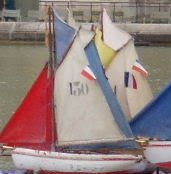
 a partial glimpse of a colourful sail past towards the annual week-long sailboat festival in May around the Gulf of Morbihan, which is swamped with landlubbers and sailors alike and which we valiantly tried to view more of...
 at dockside in La Trinité sur Mer, the contrast of a classic ketch with the latest in high-tech design at rest before racing off halfway around the world...
 eager children rigging their boats for some lessons on the water before also racing off around the world!
 from an island in the Golf we watch a sailboat glide past a row of beach cabanes...as we sit in the afternoon sun waiting for our bateau to come in...
 the distinctive orangey-brown sails of a traditional sinagot waiting for the wind to pick up to move it through the islands of the Golf...
 the windy waters around La Citadelle de Port-Louis usher sailboats of all sizes by the entrance to Lorient's harbour... this 16th century fortification was originally constructed by the Spaniards under Philippe II, then partially demolished at the end of the Spanish occupation and rebuilt again under Louis XIII... it now houses both the Musée national de la Marine and the Musée de la Compagnie des Indes [East India Company's museum], the only museum in France to depict the history of the great trading companies of the 17th and 18th centuries...
 at anchor across from the massive German-built submarine bunker-base in Lorient, now disused, but still much too colossal to demolish...
 this lighthouse had been converted into a single hotel room with a 360 degree view, and le petit déjeuner is hoisted up on a seaworthy rope!.. [it is apparently the only lighthouse B & B in France]
 near where we were staying is this solitary minimal castellated villa overlooking the sea, a little forlorn and stoic even on brilliant days softened by effusive expanses of wildflowers...
 and of course, tumbling down old stone barns are always a poignant sight to behold... this one with a graceful roof curvature balanced so precariously that a strong gust of wind could reduce it to a mound of rubble as we stand and watch...
 an evocative touch of chinoiserie to jazz up any street, even in the ancient celtic depths of southern Brittany... a little like me, an exotic anomaly amongst the hardy sailors, rough-and-ready pirates and salty-tongued fishermen...
 and hidden above our favourite beach is a shuttered-up comanderie turned holiday-house that has its own gunnery bunker looking out to sea... a somewhat sinister feature to stumble upon on the most tranquil of beaches!
 on may day sweet children sell fragrant bunches of muguets [lily-of-the-valley] at the entrance to an enormous brocante in a forest grove off a country road...
 hundreds of bargain-weary brocanteurs and multi-generational families congregate in organized campground chaos and spill out their dog-eared offerings to the thousands who will venture forth in rain or shine to pick through the millions of bits and pieces discarded from other people's lives...
 I don't find much for myself anymore but still keep an eye out for things requested by friends and clients...
 this cool old engraving of a grouping of the Reines de France for 10 euros was very tempting...and the cool old gentleman selling it told us that it had been sitting [and deteriorating!] in his attic for decades...
 as always, back to portside on the côte sauvage yielding up some elegant rejectamenta at low tide...
 through a locked and rusty iron gate and shaded by an unkempt garden, we imagine shifting shadows behind dusty window panes...but the white door appears unopened for a long time...
 I peek through the crack and spy dirt floor and abandoned detritus scattered about under decades-thick dust...
 another lost in time church we could not enter, especially this side door being slowly sealed up by creeping ivy...but through the crack, the light can still get in...
 the odd placement of a small planter on the threshold must trip some hobbits up!...but the shaping of the large stone frame is most voluptuous...
 and back on the côte sauvage, narrow doors buffer against the strong winds and other wild tempestuous beings!